
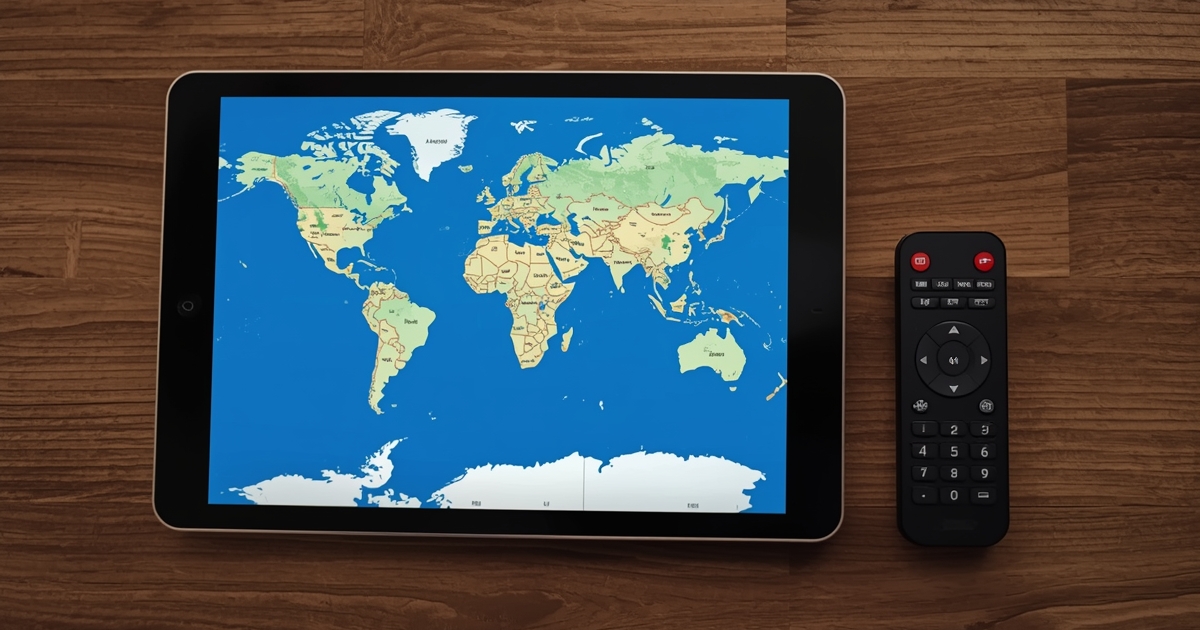
One of the appeals of IPTV over traditional cable is access to channels well outside your own region — news, sports, and entertainment from other countries, all in one app instead of a separate satellite dish for each. International channels behave a little differently from domestic ones, mostly because of where the signal physically originates.
Distance from the source affects stability more than quality settings
A channel broadcasting from far away routes through more network infrastructure to reach you, which can mean slightly more buffering even when your own connection is fine. This is separate from picture quality — a far-away regional channel can still broadcast in high definition, it just has a longer and sometimes less direct path to travel.
Time zones change when content actually airs live
A program airing “live” on an international channel follows that country’s schedule, not yours, so a primetime show might land in the middle of your afternoon. This matters most for live sports coverage, where match times are set entirely by the originating league’s calendar.
Language and subtitle availability varies by channel
Not every international channel offers subtitles or an alternate audio track, and this depends entirely on how that specific broadcaster packages their feed — it is not something an IPTV app can add on its own. If a particular channel matters to you, it is worth confirming its language options during a trial period rather than assuming after you subscribe.
Useful if you split time between countries
For anyone who splits time between two countries, or wants to keep up with news and shows from a home country while living abroad, an international channel package does the job a satellite dish used to. The guide to using IPTV while traveling covers the connection side of watching from outside your usual location.
What to verify before relying on a specific channel
If there is one international channel you genuinely need — for a specific league, a specific news network — verify it loads reliably during a trial before subscribing on the assumption it is included and working. Channel lineups shift over time as broadcasters renegotiate rights, and confirming current availability directly is always safer than relying on an old list.